
Asia-US Ocean Freight Rates Fall for Sixth Week as India-US Rates Drop 21%
Asia-US ocean freight rates continued to decline this week, marking the sixth consecutive weekly drop. The biggest decreases were on routes to the US East Coast, while West Coast rates remained relatively steady. However, some routes to the US interior saw increases.
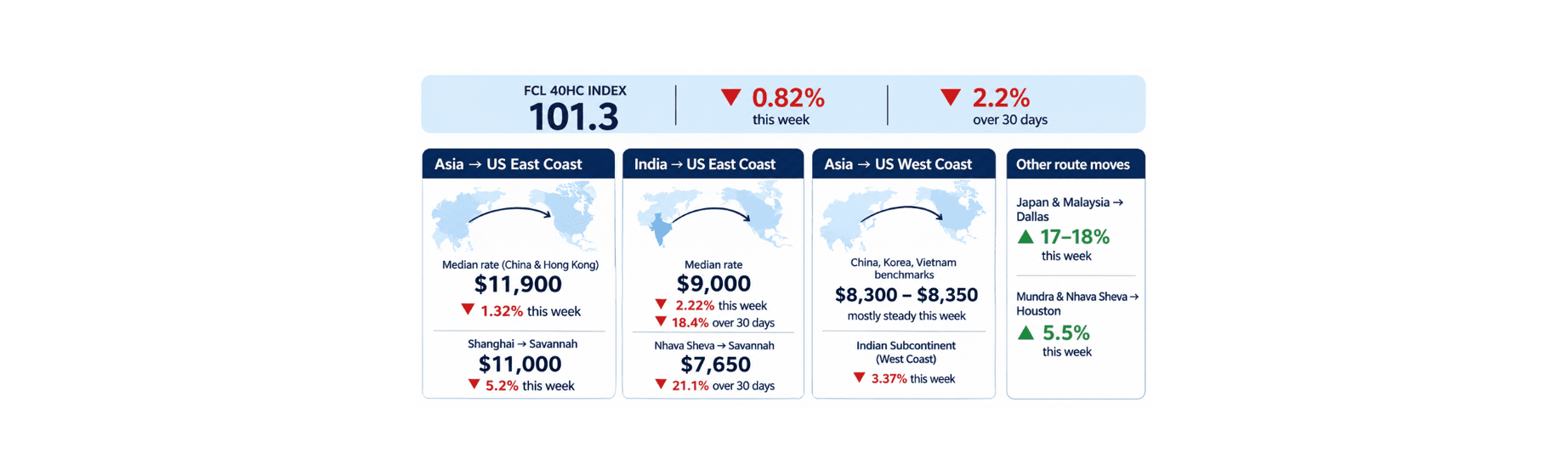
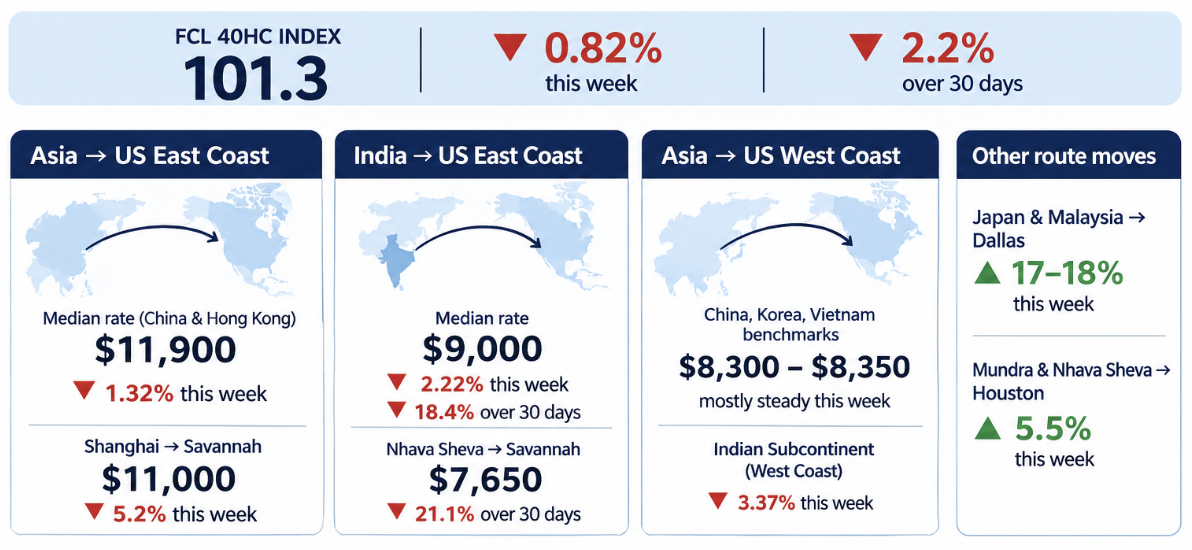
According to the Starboard Freight Index, the 40HC container rate index fell 0.82% between November 3 and November 10, bringing it to 101.3. Rates are now down 2.2% over the past 30 days, giving back much of September's increase.
What's happening across major trade routes?
Three trends stand out in this week's data:
- US East Coast rates continue to fall: Rates from Asia to the US East Coast declined across all major origin regions. Shanghai-to-Savannah rates dropped 5.2% in one week to $11,000. This downward pressure comes as the traditional peak shipping season winds down, import demand softens and more vessel space becomes available. Carriers' attempts to introduce November rate increases are also facing resistance from customers.
- India-US rates see the biggest declines: Rates from the Indian Subcontinent are down 3.4% this week and 13.3% from their September 30 peak. Nhava Sheva-to-Savannah has fallen 21.1% over the past 30 days, reaching a median of $7,650. Slower booking activity and increased competition among carriers for cargo have added pressure to this trade, following a period of tighter capacity and service changes.
- US West Coast rates remain steadier, while some inland routes rise: China, Korea and Vietnam-to-US West Coast benchmarks held around $8,300-8,350. Capacity management, including blank sailings, has helped support rates on these routes despite softer demand. In contrast, Japan and Malaysia-to-Dallas rates increased by 17-18% this week, while Mundra and Nhava Sheva-to-Houston rose by 5.5%. The report records these increases but does not identify a specific market-wide reason behind them.
What this implies for freight forwarders
With rates moving in different directions across major trade lanes, freight forwarders need to keep their pricing up to date. Falling rates on some Asia-US routes may create opportunities to offer more competitive quotes, while increases on other lanes can affect margins if older rates are still being used.
Checking current carrier pricing before quoting helps forwarders stay competitive and avoid relying on outdated rates.
The Starboard Freight Index enables freight forwarders to benchmark ocean FCL rates on more than 2,000 trade routes and compare quotes with market medians. It's free to use and updated daily.